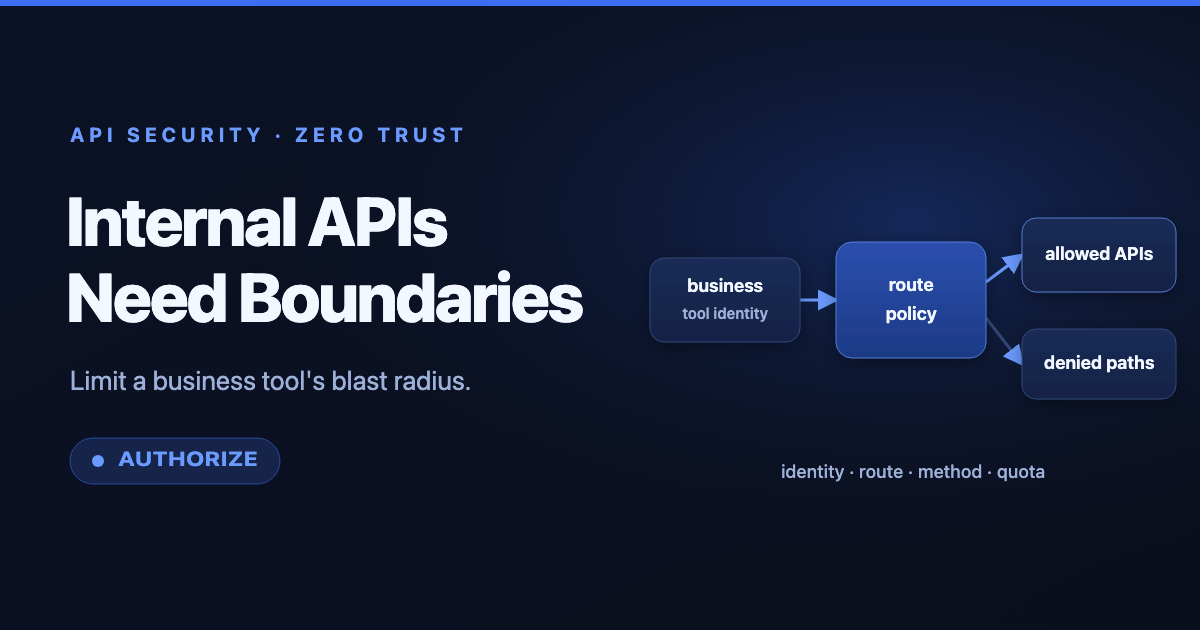
Internal APIs Are Production Security Boundaries
Originally published by Yilia Lin on API7.ai. This article was drafted with AI assistance. “Internal” describes where an application sits, not how much damage its APIs can cause. A sales tool may reac

Introduction: The Turning Point from Dispersed Traffic to Intelligent Governance Since early 2025, within a leading global appliance giant, multiple business lines have introduced numerous large language models (LLMs). The R&D department needed codin...

Key Takeaways REST APIs excel in simplicity, caching, and microservices architecture, with widespread adoption and mature tooling ecosystem GraphQL provides precise data fetching, reduces over-fetching, and offers superior flexibility for complex d...
Introduction As large language model (LLM) applications experience explosive growth, a pivotal challenge emerges: how can these models transcend mere dialogue boxes to interact seamlessly with our daily files, applications, and web services? Addressi...

API gateway health checks play a vital role in ensuring your system remains reliable and performs optimally. These checks help you identify potential issues before they escalate, allowing you to maintain seamless operations. By adopting best practice...

In this blog, we analyze Kong Konnect Plus, a scalable API management solution offering three distinct pricing models: Serverless, Self-hosted/k8s, and Dedicated Cloud. Each model caters to different deployment needs while leveraging Kong Konnect's c...
Key Takeaway Async APIs and microservices are essential for modern application development but pose integration challenges. API gateways play a crucial role in bridging these gaps by providing security, performance, and developer experience benefit...